
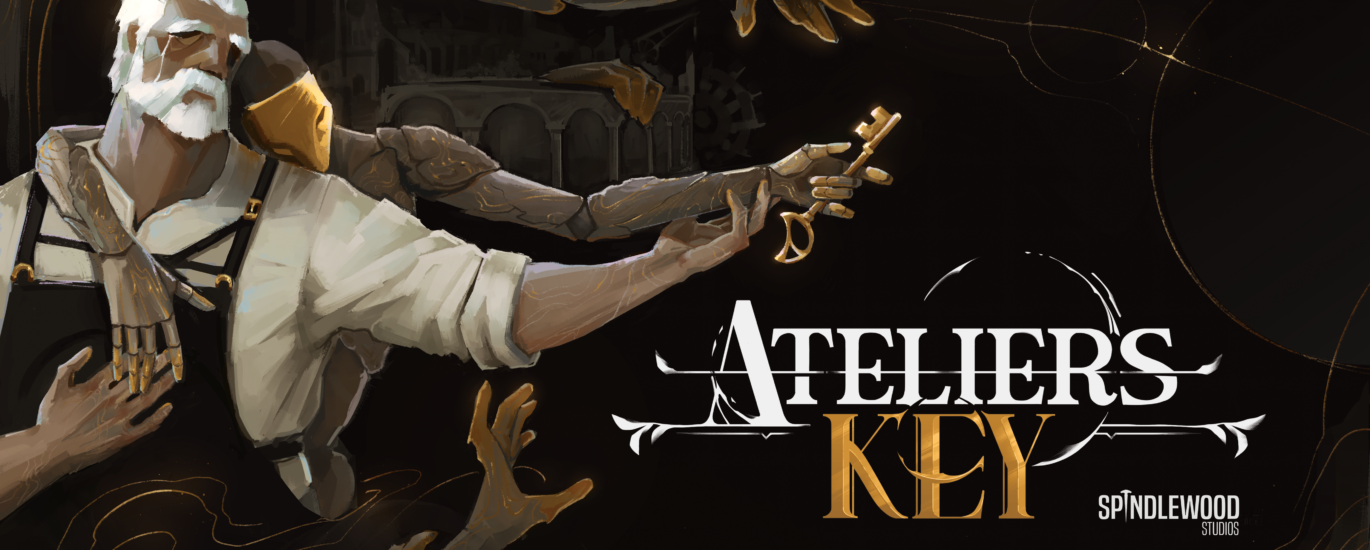
Atelier’s Key is a dark-fantasy FPS set in a root-bound Victorian world inhabited by puppets, formed around a central deity known only as ‘The Carver’ released on Steam
Responsibilities: I was Lead Designer with my main focus on level design and balancing. Along with additional responsibility for pitch deck creation and presentation
Team Size: 12
Development time: 9 months
Tools: Unreal Engine 5, GitHub, Fork, Teams and OneDrive
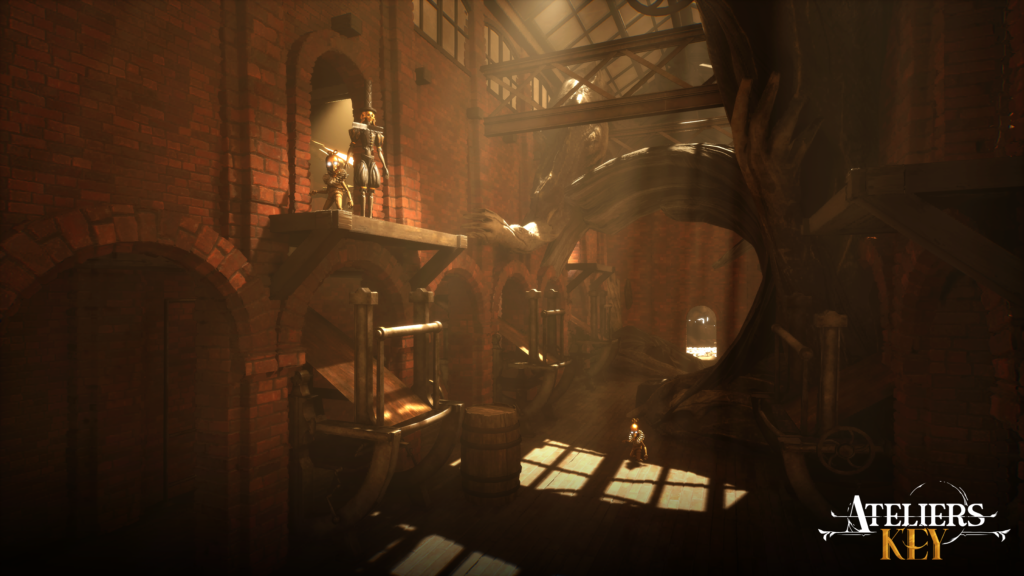
Level Design and Balancing
Design Objectives
Flow
Whiteboxing
Heatmaps
Enemy and Gun Balancing
What I learned
Design Objectives
- Level navigation seeming open but is in actuality linear
- Ensuring that levels are detailed in aesthetic design but simple to navigate to allow focus on combat
- As the player becomes used to combat the levels gain more depth and nuance
- Difficulty increases as play progresses but never too much to feel unfair
- Ensuring that there is the right ratio of enemy types to keep combat interesting and fresh
- All weapons feel as though they are a viable option throughout play to accommodate different playstyles
Flow
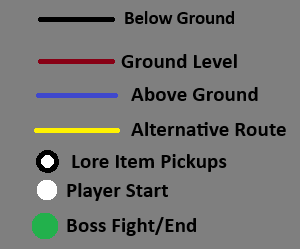
Whiteboxing
Throughout Atelier’s Key the main focus of the level design was to keep navigation of levels simple when a new mechanic is introduced to ensure that player focus would be on learning and mastering each mechanic. Then as the game progresses the levels become more advanced and provide the player gradually with more freedom of choice.
Streets
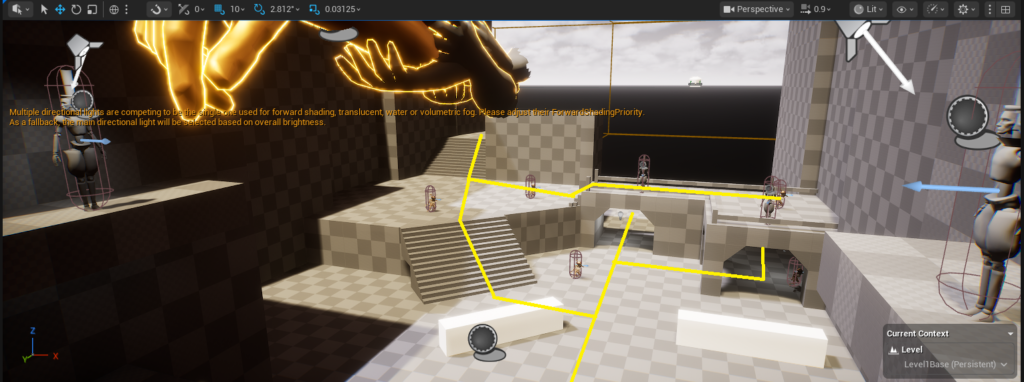
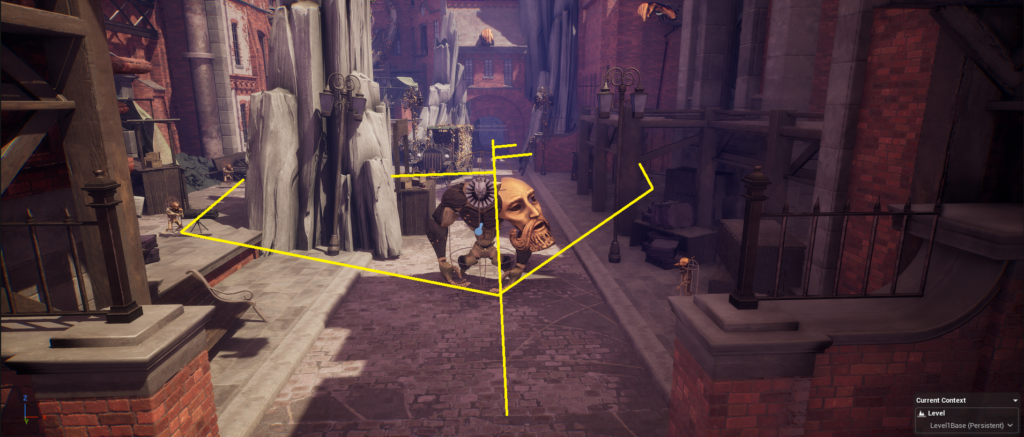
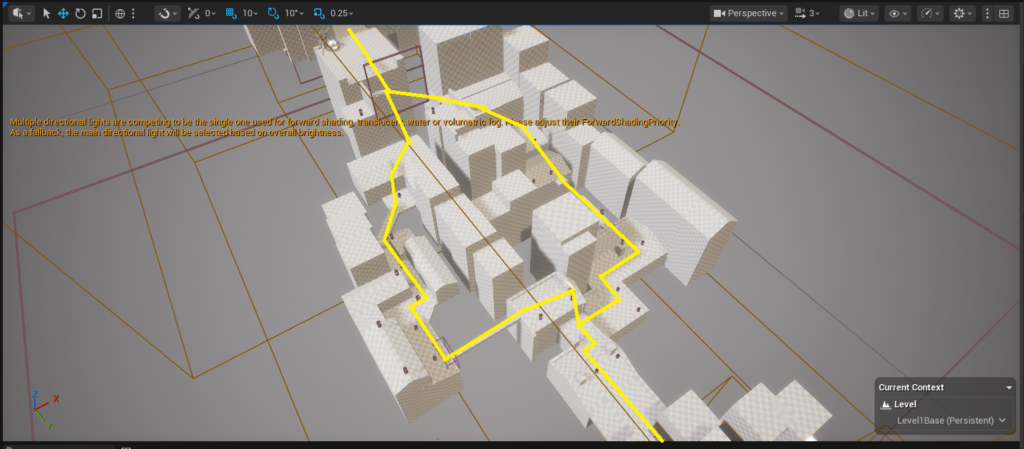
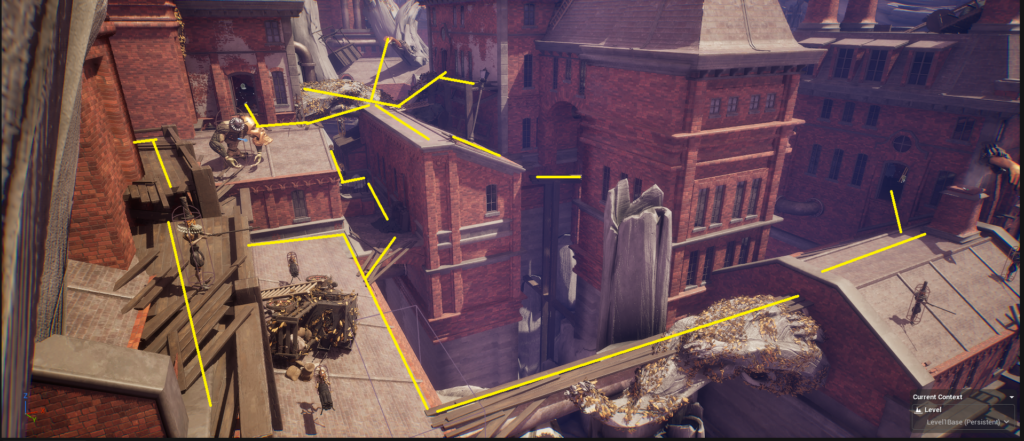
This level is the first within the game that provides the player with a basic navigational choice, left or right pathway. This simple choice was decided so that players could gradually become accustomed to the more open spaces to ensure that they were not overwhelmed by vast navigational choices.
Read More
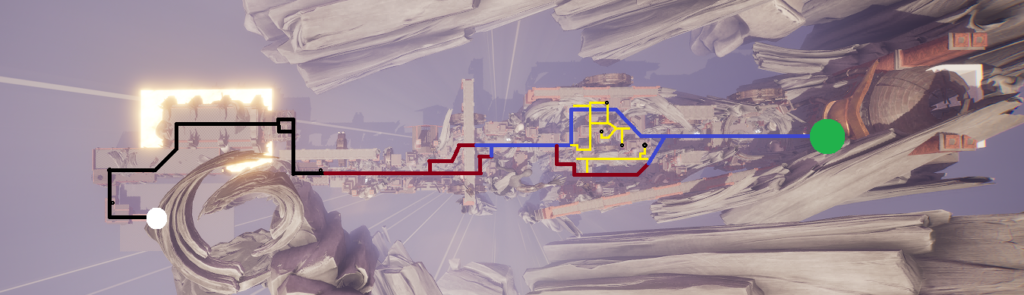
In the ‘Streets’ level the player is given a new mechanic, the grappling hook. This addition to the players movement creates a new dimension that needs to be considered in the level design. As seen in the “Streets” image there are now multiple different routes that the player can take/access by using the grapple. These routes, while seeming more open actually lead the player to the same location to create an illusion of freedom and exploration.
Rooftops:
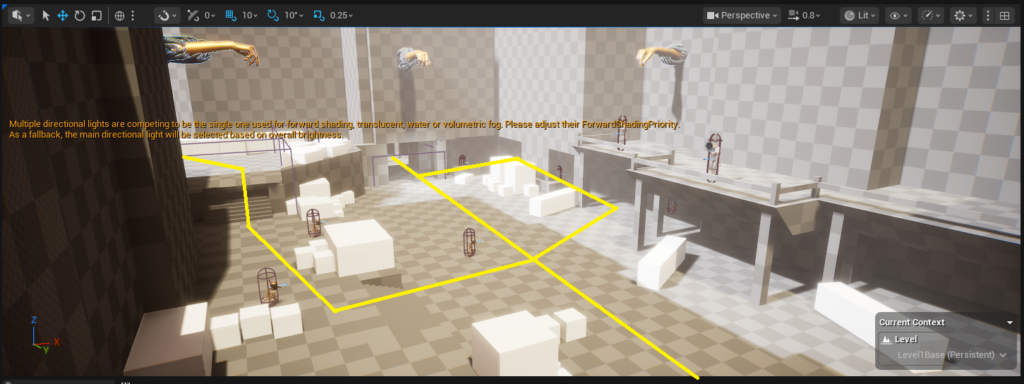
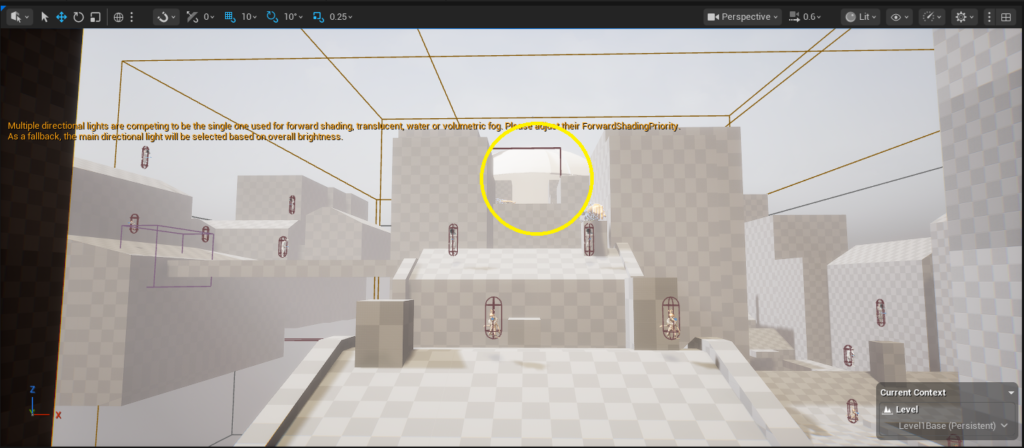
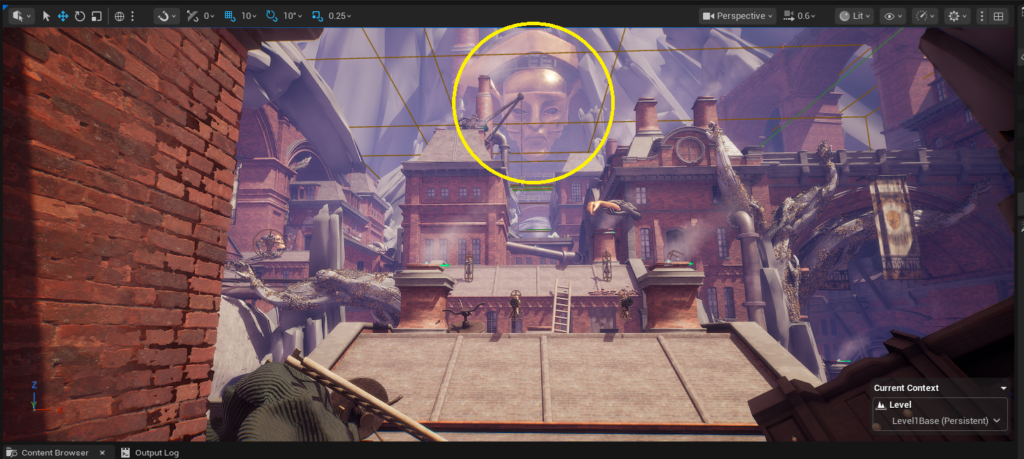
The main objective with the rooftops sections was ensuring that the boss room could be seen from almost anywhere within the level to give players a visual distinct location that they can begin to move towards as this is the first level within the game that is more open rather than being very linear.
Read more
While the ‘Streets’ level was restricted due to the introduction of a new mechanic, the ‘Rooftop’ level removed many of these limitations, resulting in level complexity increasing. This was achieved through introducing multiple different routes each supporting different styles of gameplay and encouraging exploration. This design choice was intended to mirror the players growing game sense; when players have limited game knowledge, they are confined within more linear levels. However, as their game sense increases, the levels become more open allowing for increased experimentation and exploration.
Heatmaps
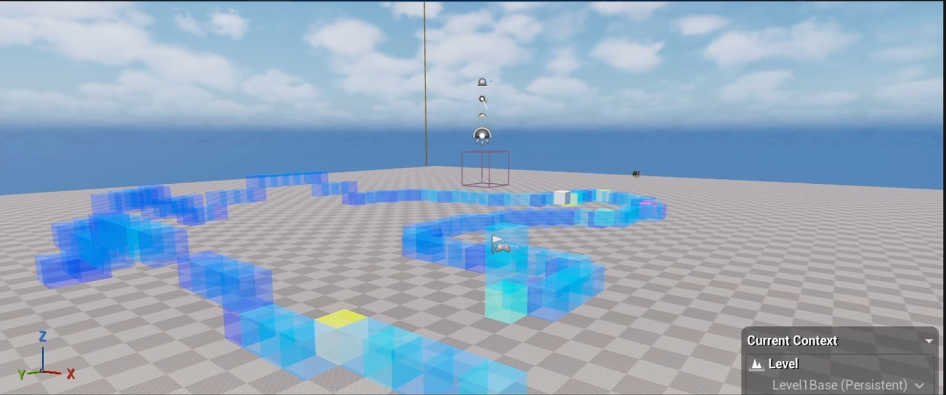
Incorporating a heatmap allowed the levels to be iterated on and developed quickly ensuring more time could be spent on weapon and enemy balancing. This 3D heatmap allowed me to see the areas that players were getting stuck or lost allowing for quick level iteration to ensure navigation was simple.
Enemy and Gun Balancing
To support my process I compiled a note document that contained the types of enemy and guns along with all the values that could be changed. To ensure that no values got deleted during merge conflicts with Git. This process was slow and gruelling as finding the right values for play, to ensure that the game wasn’t too easy or impossible to complete, was extremely difficult. My main focus to help with this process was getting as many playtests as I possibly could to accommodate for varied playstyles and levels of skill.
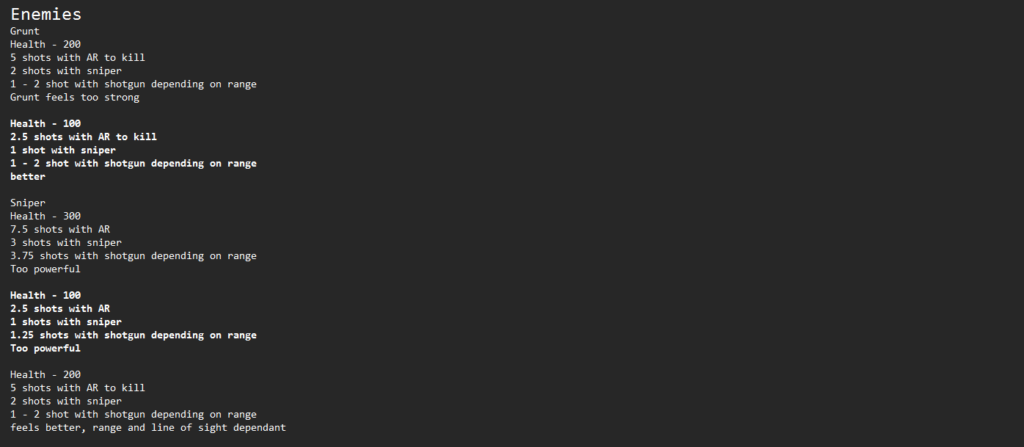
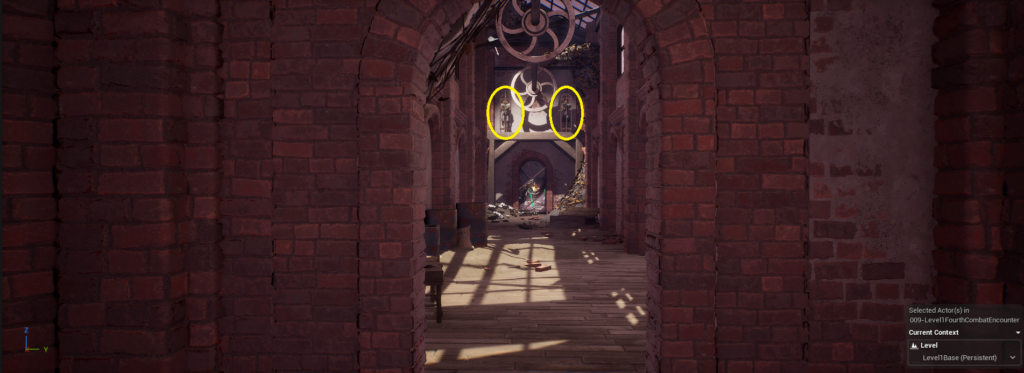
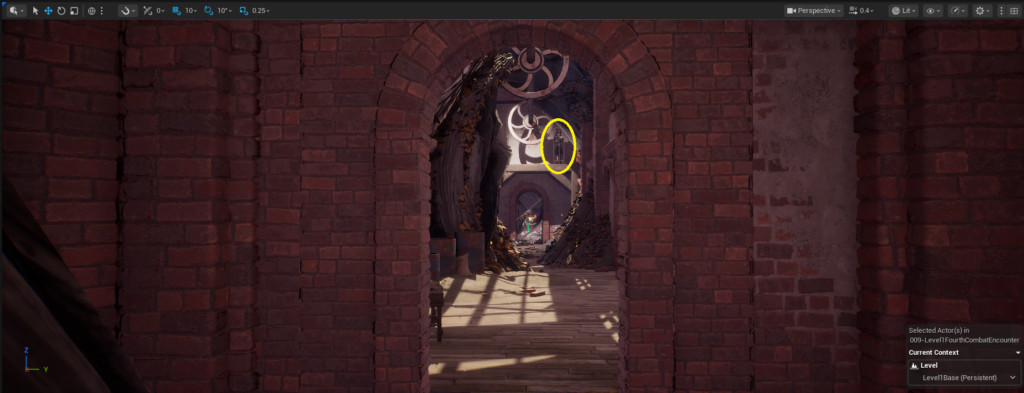
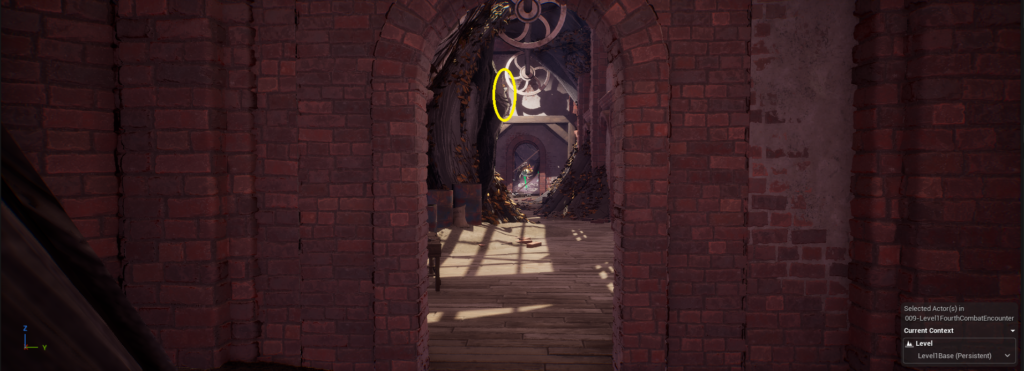
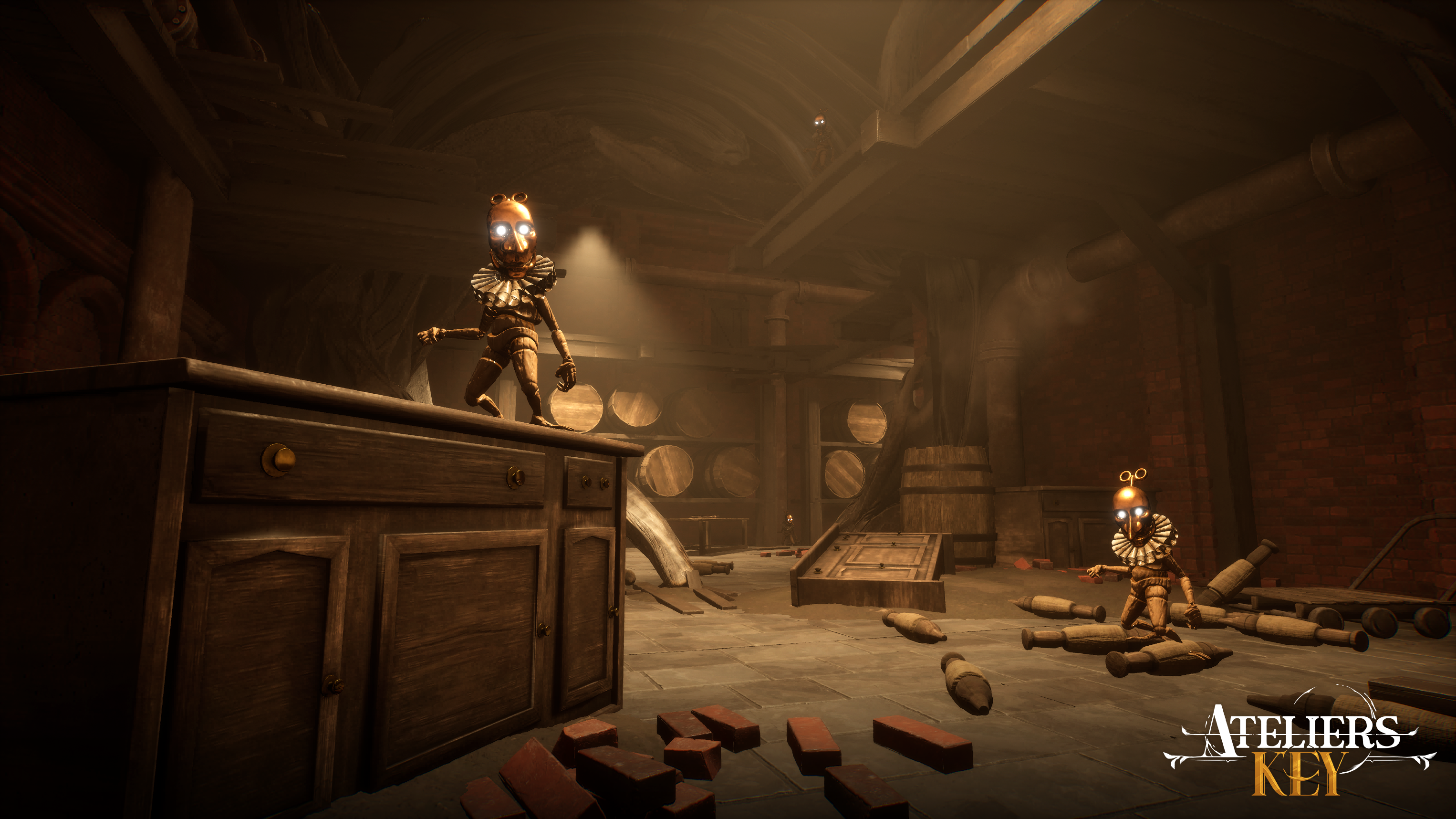
Balancing each enemy type in isolation I found to be unusually difficult particularly areas that only included snipers. Rather than focussing on individual enemy values I focussed on the surrounding level design to make the enemies feel easier or more difficult to kill. This required more iteration and playtesting but I found this approach to be simpler and quicker for me to implement and understand.
This approach to enemy balancing and level iteration was used throughout the game to ensure that areas were fun and rewarding once completed.
Read More
In “Corridor V1” there were two snipers positioned in the roof as there was no obstacle in the corridor. Feedback I got from players was that they felt as though it was unfair as they were unsure of how to approach both snipers.
To combat this I placed a root within the wall (Corridor V2) to block one of the snipers field of vision this allowed players to navigate through this section and kill the snipers. This solved the issue to some extent but I began to notice that players were getting shot by the visible sniper through the doorway. Resulting in unfair deaths and players struggling with level navigation as they assumed that the intended path was the wrong one.
From this feedback I created another iteration “Corridor V3” . Where I removed the sniper that was visible the entire time along with moving the hidden one slightly so he was visible behind the root, while also ensuring that his line of sight was blocked until the player approaches him. This resulted in players getting less frustrated and confused allowing for a smoother player experience.
What I learned
The level of scope and ambition that this project required allowed me to gain a better understanding for both teamworking skills but also personal developmental improvements. I gained vital information about patience within a team but also the importance of keeping a strict schedule with both agile workflow within the team but personal work-life balance. Furthermore, I expected to only work on level design going into the project but due to uncontrollable factors I became the sole designer for the project resulting in me taking on more work than anticipated. While I felt annoyed and overwhelmed during some aspects of development undertaking these areas that I wasn’t confident in I have become a better designer and team practitioner. Overall, I am proud of what was achieved during this project.